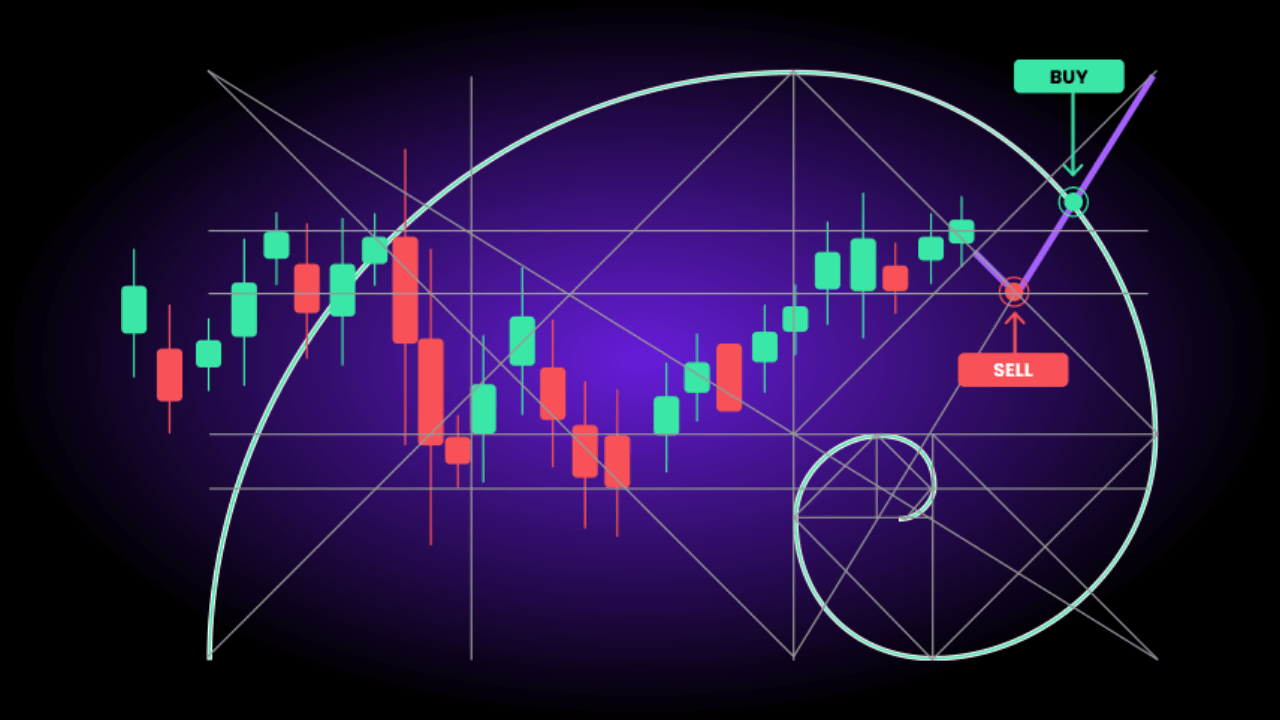
The Fibonacci sequence, a series of numbers in which each number is the sum of the two preceding numbers (1, 1, 2, 3, 5, 8, 13, etc.), has been a cornerstone of technical analysis in financial markets for decades. This mathematical concept, discovered by Leonardo Fibonacci in the 13th century, has been observed to appear in various aspects of nature and human endeavors, including the financial markets. Traders have long been fascinated by the potential of Fibonacci levels to predict price movements and identify profitable trading opportunities.
One of the primary ways traders utilize Fibonacci is through the application of Fibonacci retracement levels. These levels are calculated by identifying the high and low points of a significant price move and then applying Fibonacci ratios (23.6%, 38.2%, 50%, 61.8%, and 78.6%) to the distance between these points. The resulting levels are believed to act as potential support or resistance areas, where price may pause or reverse its direction. Traders often use these levels to set stop-loss orders, limit orders, or to identify potential entry and exit points for trades.
Another strategy that incorporates Fibonacci is the Fibonacci extension. This involves extending the Fibonacci sequence beyond the 100% level to project potential price targets. By applying Fibonacci ratios to the distance between significant price levels, traders can estimate where price might move to in the future. This can be particularly useful for traders looking to ride the trend or anticipate major price movements.
A common strategy that combines Fibonacci with other forms of technical analysis is the Fibonacci confluence strategy. This involves looking for areas where multiple Fibonacci levels converge with other forms of support or resistance, such as trend lines, moving averages, or chart patterns. The idea is that where multiple forms of support or resistance converge, the probability of a significant price reaction increases, providing traders with higher confidence in their trading decisions.
Despite the popularity of Fibonacci-based strategies, it's essential for traders to understand that no single method can guarantee profits. The markets are inherently unpredictable, and numerous factors can influence price movements. Therefore, it's crucial to combine Fibonacci analysis with other forms of technical and fundamental analysis to form a comprehensive view of the market.
For those looking to incorporate Fibonacci into their trading plan, here are a few tips:
- Start by identifying significant price moves and applying Fibonacci retracement levels to these moves.
- Look for confluence between Fibonacci levels and other forms of support or resistance.
- Use Fibonacci extensions to project potential price targets.
- Always combine Fibonacci analysis with other forms of technical and fundamental analysis.
- Backtest any strategy in a demo environment before applying it to live markets.
In conclusion, while Fibonacci analysis can be a powerful tool for traders, it should be used as part of a broader trading strategy that incorporates multiple forms of analysis. By understanding how to apply Fibonacci levels and combining them with other technical and fundamental tools, traders can enhance their ability to navigate the markets and identify profitable trading opportunities.
